Top Home Equity Lenders In 2026
Compare our top picks for the best home equity agreements, home equity loans & HELOCS, plus learn more about how home equity works & how you can use it.
If you have sufficient equity in your home, you can use it to access cash. Your home acts as collateral for these loans or agreements.
Ways to access the equity in your home
Many or all companies we feature compensate us. Compensation and editorial research influence how products appear on a page.
Home Equity Agreement (HEA) Lenders

Availability depends on your state.
Use the filter above to see what's available in your state. If there are no results, consider alternative home equity financing solutions, such as the best HELOCs, best home equity loans, and best home-sale leasebacks below.
Home Equity Lines of Credit (HELOC) Lenders


All loans are subject to credit approval, membership and loan program requirements. Not all applicants qualify for the lowest rates and may be offered credit at higher rates or with different terms. Hazard insurance and, if applicable, flood insurance is required. Borrowing limits apply based on your home’s value. Home loans are not available in Texas. Conditions and restrictions may apply. Rates, loan programs, terms, and conditions are subject to change without notice.
[1] APR = Annual Percentage Rate. The introductory APR is fixed for one year (twelve months). After one year, the APR is variable based on the U.S. Prime Rate as published in the Wall Street Journal, plus a margin. To obtain an introductory rate, borrower(s) must meet credit and loan program requirements, including, but not limited to: (1) maximum Combined Loan-to-Value (CLTV) of 75%; (2) minimum VantageScore 4.0 credit score of 720; (3) an initial draw of at least $25,000 is taken at account opening and the balance must be maintained for at least 12 consecutive months; (4) automatic payments from a FourLeaf personal savings or checking account for the monthly HELOC payments; and (5) borrower must not have had a previous introductory rate for a FourLeaf HELOC within the past five years. Failure to meet the introductory APR conditions may result in the loss of the introductory APR, meaning the APR will change to the standard APR and will be subject to those conditions. Loan amounts over $500,000 are not available for the introductory rate.
[2] The standard APR is variable based on the U.S. Prime Rate as published in the Wall Street Journal, plus a margin (if applicable) and is subject to increase after consummation. The current standard APR is as low as 7.00% as of 10/7/2026. Not all applicants will qualify for the lowest rate and may be offered credit at higher rates and other terms based on creditworthiness. The minimum floor APR is 3.25%. HELOC rates may not exceed the maximum legal limit for Federal credit unions (currently 18%). The Prime Rate as of 10/7/2026 = 7.00%. Rates shown are based on a borrower’s primary residence, a maximum CLTV of 65%, a minimum initial draw of $25,000 taken at HELOC account opening†, and automatic payments‡ made from a FourLeaf personal savings or checking account. For Closing costs, see [3] below.
† Initial Draw of $25,000 or more: The APR includes a 0.25% discount if a Variable Rate Advance of $25,000.00 or more is drawn at account opening and the outstanding balance is maintained for at least twelve (12) consecutive months. The APR will increase by 0.25% if at any time your outstanding HELOC balance falls below $25,000.00 within the first twelve (12) months of account opening.
‡ Automatic Payments: The APR includes a 0.25% discount if your monthly HELOC payments are automatically withdrawn from your FourLeaf savings or checking account. The APR will increase by 0.25% if at any time your monthly HELOC payments are no longer automatically withdrawn from your FourLeaf savings or checking account.
[3] Closing costs for the first $500,000 will be paid by FourLeaf but must be repaid by the borrower(s) if the HELOC is closed within first 36 months of account opening. These fees generally range between $500.00 and $15,000.00 depending on the line amount, property value, location, and/or property type. Line amounts over $500,000 may be available on a case-by-case basis to qualified applicants, are not eligible for the discounted introductory rate at any time, and the borrower(s) will be responsible for mortgage-related taxes and title insurance costs on the line amount over $500,000 (up to the approved credit limit). The total third party fees generally range between $500.00 and $60,000.00 depending on the line amount, property value, location, and/or property type. Property insurance (including flood insurance, if applicable) is required.


Home Equity Loan Lenders


- How to Take Equity Out of Your Home
- Best Home Equity Loans
- Best Home Equity Lines of Credit
- Best Home Equity Agreements
- Best Home Sale-Leasebacks
Home equity reviews
Several companies allow you to access the equity in your home. Before moving forward with any company, it’s important that you review what it offers to ensure it offers you the best terms.
- Figure HELOC Review
- Hometap Review
- Spring EQ Home Equity Loan Review
- Point Home Equity Review
- Unison Home Equity Review
- EasyKnock Home Equity Review
Other home equity resources
Using your home's equity for home improvements
- Home Addition Loans
- Highest ROI Renovations
- How to Pay for Emergency Home Repairs
- Home Improvement Financing
Home improvement projects inside your home
- How Much Does It Cost to Fix or Replace a Broken Water Heater?
- How Much Does an Emergency Plumber Cost?
- Best Loans for Plumbing Financing
- How Much Does It Cost to Paint a House?
- Understanding Drywall Repair Costs
- How Much Should It Cost to Add a Fireplace or Furnace?
- How Much Does It Cost to Replace or Repair a Furnace?
- How Much Should a Kitchen Remodel Cost?
- How Much Should a Bathroom Remodel Cost?
- Cost to Finish a Basement
- Mold Remediation Costs
Home improvement projects outside your home
- How Much Does It Cost to Replace a Roof?
- How Much Should Window Replacement Cost?
- How Much Does a Storm Shelter Cost?
- What to Know About Siding Replacement Cost
- How Much Does It Cost to Install Solar Panels?
- How Much Does It Cost to Install or Repair Gutters?
- How Much Should a Foundation Repair Cost?
All home equity articles
-
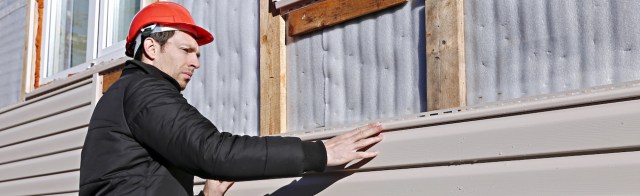
What to Know About Siding Replacement Cost and How to Pay for It in 2026
Siding replacement runs $5,550 to $17,700 for most homes, averaging about $11,600 nationwide. What you’ll actually pay comes down to three things: material, square footage, and location. And no, you…
-

How Much Should It Cost to Add a Fireplace or Furnace to Your Home?
Homeowners considering a new fireplace or furnace for their homes often underestimate the price range. Fireplace installation averages about $2,000, with furnace installation closer to $4,800. That said, I’ve seen…
-

How Much Should a Bathroom Remodel Cost?
The typical bathroom remodel falls between $6,650 and $17,600. Most land around $12,100. Your project scope matters—so does which bathroom and what materials you pick. Go all out with custom…
-
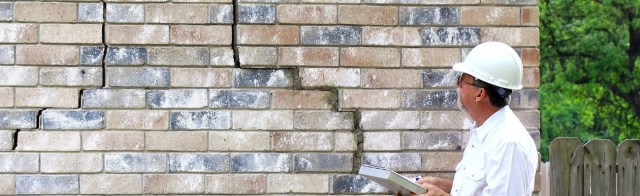
How Much Should a Foundation Repair Cost?
Got foundation problems? The average bill lands around $5,200. Most homeowners pay between $2,200 and $8,150 or more. It all depends on what’s wrong, whether you caught it early or…
-

How Much Does It Cost to Paint a House?
It costs about $2,000 to $6,000 to paint the entire interior of most houses. For exteriors, it costs between $1,800 and $4,550. A single room you paint yourself might run…
-
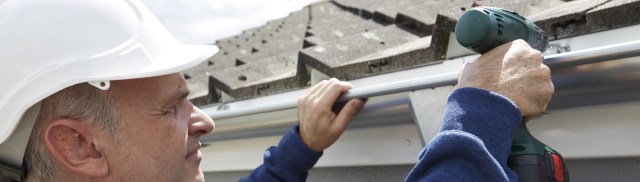
How Much Does It Cost to Install or Repair Gutters?
Gutters are an often-overlooked but essential part of your roof system. They protect your home and landscape from water damage, preventing serious problems like mold, rot, flooding, and erosion. The…
-

Should You Pay Off Debts With a HELOC or Home Equity Loan? Experts Weigh In
If you’re a homeowner with credit card debt or student loan debt, you might be wondering if it’s a good idea to use a home equity loan or a home…
-

Best HELOCs for Investment Properties: November 2026 Rates
An investment property can pay for itself and then some if you’re collecting enough rent to cover the mortgage, plus a little extra. As your rental property’s value grows, so…
-

Can You Get a HELOC on an Investment Property? What to Know and Where to Get One
You can get a HELOC on an investment property, but qualifying is more difficult than getting one on your primary residence. Lenders view investment properties as higher risk, which means…
-

How Much Does It Cost to Install Solar Panels?
Nationally, solar installations average $27,150. I’ve seen quotes range from $18,350 on the low end to $36,400 on the high end. Per-watt pricing sits at $2.50 to $3.50. What you’ll…