
A conversation with Dan Amato & Catherine Collins
Major home renovation projects rarely go strictly according to plan, so you may start looking at home improvement loans. Whether it’s a simple roof repair revealing rotten fascia or an emergency plumbing leak forcing a full kitchen gut job, unexpected home maintenance costs can quickly double your original budget. To understand how homeowners can manage spiraling repair expenses without taking on new monthly debt, award-winning personal finance writer & author Catherine Collins sat down with Dan Amato, Executive Vice President of Sales and Investment Operations at Hometap to discuss alternatives to traditional home improvement loans.
In this interview, they break down the hidden costs of home renovations, the financial risks of “half fixes,” and how a home equity investment (HEI) offers a loan-free alternative to traditional bank HELOCs.
Key Takeaways
- The Problem: Exterior projects like roof repairs frequently expand beyond their original scope to include gutters, fascia, and decking because the home functions as an interconnected system.
- The Pitfall: “Half-fixes” to save money often compound the original problem, causing leaks and creating even more maintenance expenses down the road.
- The Solution: A home equity investment (HEI) provides a lump sum of cash in exchange for a share of your home’s future value, requiring no monthly payments for up to 10 years.
Read our full Hometap review
Table of Contents
- Key Takeaways
- The hidden trap of home renovations: Why $15,000 repairs become $30,000
- The true cost of “half-fixing” home repairs
- Understanding HEI costs, property titles, & settlement options
- ✨ Real story: How Katie saved her kitchen & independence in retirement
- Words of wisdom: 3 rules for financing major home repairs
- FAQ
- Related articles
The hidden trap of home renovations: Why $15,000 repairs become $30,000
Catherine Collins: At LendEDU, one of the biggest financial obstacles we hear about from our readers who are homeowners, is how to pay for home repairs or improvement projects. And if you’ve ever done a major project on your home before, you know how quickly a project can spiral beyond its original scope.
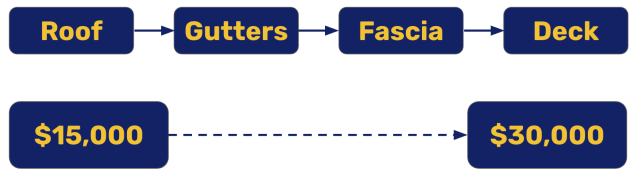
For example, your home needs a new roof, so you have a roofing company come out for a quote, but as they inspect what needs to be done, they identify that you also need to replace the gutters and fascia and part of your deck will need repairing due to the other improvements being done and suddenly a $15,000 project turns into $30,000. How do you pay for that?
Today we’re speaking with Dan Amato, our EVP of Sales and Investment Operations at Hometap, which is a home equity investment company founded in 2017, that has helped customers through situations just like this. Hometap offers an alternative way for homeowners to tap into their home equity to pay for these large scale projects, without taking on monthly payments. So, Dan, welcome. Let’s get started.
Hometap: Catherine, thank you so much. It’s so great to be here and so excited to talk about something that, for me, is first hand experience as a homeowner and getting to talk with so many homeowners. It’s something that we are very excited to break down today.
Catherine: Yeah, well we’re really glad you’re here and I’m curious, in your experience, what is the biggest obstacle that homeowners face when they’re embarking on a project like a new roof or a roof repair? Like is it typical for a roofing project, for example, to expand into something larger to include things like gutters, fascia, decking and and why is that?
Hometap: Yeah, the biggest obstacle that we hear from homeowners is the gap between what they expect it to cost, versus what it actually costs. And the challenge there is, the budgeting process is hard when you’re planning to do a project like a roof. And with the home being so connected, many times when you want to work on one piece of the home, it requires you to also have to do maintenance in other pieces. And that shock of planning for one project, which turns into two or three very quickly, can be very disorienting for homeowners and we hear a lot of that first hand when we’re working with our homeowners who are looking to do big home renovation projects.
With the home being so connected, many times when you want to work on one piece of the home, it requires you to also have to do maintenance in other pieces. And that shock of planning for one project, which turns into two or three very quickly, can be very disorienting for homeowners
– Dan Amato, EVP of Sales and Investment Operations at Hometap
Catherine: Yeah, I mean that makes sense, and okay so now we’ve discussed how a roof repair can spiral into gutters and fascia but, what about the unseen costs in interior or structural remodels? Based on what you see at Hometap, what percentage of contingency funding should homeowners have accessible like even before the first hammer swings?
Hometap: Yeah, it’s a great question and it’s a question that we get very often from our homeowners. The worst outcome isn’t deciding not to do a project. It’s doing a project and then not being able to finish it the right way. And so planning your finances, really looking at the full spectrum of all that could happen. Expecting the project to expand is really the exception.
You know, you want to make sure that homeowners understand that the plan that you have in place might not always go that way. So, you’ve got to look at all the options that are available to you, and the timeline of which it would take for you to access it. So that if you do get a surprise, you’ve got a solid plan in place to tackle that project, and to get it done the right way.
Catherine: Yeah, that makes sense. What do homeowners, when they contact Hometap for a possible financing solution, like what do you hear from homeowners when they’re making exterior repairs or other projects? Like what kind of situations are they in?
Hometap: Yeah, most times homeowners are pretty stressed. Most times, homeowners are pretty stressed. We have two types of homeowners that we deal with:
- There’s the one type that really likes to plan ahead. And so they are coming to us proactively before they start their project.
- The other types of homeowners is they’ve already gotten started and along the way something new has popped up and now they’re looking for additional financing.
I think both of those homeowners feel the same level of pressure and stress, really understanding what’s this actually going to cost? What’s the impact going to be? Am I going to be happy with the work that gets done? And so we constantly hear homeowners in stressful situations, and our guidance to them is to really plan for this full scope project and understand what your options are before you get started.
You don’t want to be in a vulnerable situation, where you’ve now started to take off the roof or you’ve taken off your deck, and you’ve run out of funds. Now you’re extremely vulnerable, and if you can take the time to plan ahead, you can make sure that this project gets done, and it gets done right once.
Catherine: Okay. That makes sense. And I kind of want to go with the same example here. So, someone goes to get a new roof, and they find out they also need new gutters, new fascia and they need to repair the deck. So, what does full project budgeting look like for a situation like this? For example, how can the cost of the roof balloon when you add on all of these other repairs and improvements to your home’s exterior?
Hometap: Yeah, this is a really important one. It is very normal for a $15,000 roofing project to balloon up to $30,000. And I think that surprises many homeowners who haven’t gone through that experience before.
And so when you think about your home as a system, you can better understand and plan for a full spectrum of what the project is going to look like. So if your roof is connected to the gutters, if the gutters connect to the fascia, if the fascia connects to the deck, you can do a better job anticipating what additional funds may be needed in case any of those areas need repair. And having contingency plans in place can be difficult.
Not all homeowners have accessibility to a reserve of cash available to them. And actually many homeowners we talk to hear that, a very common theme is they’ve got a bunch of equity that they’ve built up in their home, and they’re excited to do something with it, but they’re cash constrained.
And so the reality is, these homeowners have actually done great job planning. It’s just the tools available to them today, they don’t match the solution that they’re looking for. And so that’s why evaluating all options, not just taking the first approval that you get, is extremely important to making sure your project is a success.
The true cost of “half-fixing” home repairs
Catherine: Yeah, I feel like when this happens, a lot of homeowners, they may feel like they need to choose which repairs and improvements to do, or they might attempt a, a “half fix” because they just can’t pay for everything. And your experience working with homeowners, what are the consequences of half fixes when it comes to these exterior home projects?
Hometap: Yeah, you are so right. And I’ve dealt with this first hand as a homeowner, and working with homeowners on a daily basis, half-fixes becomes a common part of their language when they start a renovation project. And the scary thing about a half fix, is it actually starts to compound the original issue in the first place. You know, you often don’t save money by half fixing. You’re just delaying the larger expense that often creates even more maintenance that’s needed along the way. You know, to put a new roof on a failing gutter that then leaks into your fascia, that’s just going to create a whole bunch of other issues that can be avoided if you do the job right. And many times when we talk to homeowners in these situations, it all comes down to planning, and expectation setting.
…the scary thing about a half fix, is it actually starts to compound the original issue in the first place. You know, you often don’t save money by half fixing. You’re just delaying the larger expense that often creates even more maintenance that’s needed along the way.
– Dan Amato, EVP of Sales and Investment Operations at Hometap
When a contractor comes to your home and uncovers a new issue, it’s not that they’re creating the problems, they’re just finding those problems. And so you have to understand what could come up, so that you can plan effectively, so that we don’t want to do half fixes that are going to cause us to do the work twice or three times, and add all those costs. We want to do it one time and we want to do it right.
Catherine: I like that. So, I have a few questions about Hometap specifically. So, I want to give you time to answer each one. Can you explain how Hometap’s HEI works, and how it can help finance the exterior repairs that we’ve been discussing?
Hometap: Yes, so Hometap’s HEI, which is a home equity investment. In one sentence, it’s a lump sum of cash in exchange for a share of the future value of your home. There are no monthly payments and it’s for up to 10 years. And so you get the benefit of this cash, while you’re doing a big renovation project. The last thing a homeowner wants is to add a new monthly payment into the equation. And so this solution really fits this use case, so that you can benefit from the cash up front, and plan ahead for how you tend to settle the investment.
| Feature | Hometap’s Home Equity Investment (HEI) |
| Monthly Payments | None |
| Interest Rates | None |
| Income Requirements | Flexible (Great for retirees, self-employed, or fixed incomes) |
| Agreement Term | Up to 10 years |
| How Repayment Works | Share of future home value |
Catherine: Interesting. Well, how does it compare to other financial financing options people might consider, like a HELOC or a home equity loan or even a personal loan.
Hometap: So with the HEI product, there are no monthly payments. And so that is very different from the traditional financing options that are out there. Many of the common options that homeowners are reviewing when they come to us, typically between a HELOC or a home equity loan, they come with a monthly payment and a new interest rate. And in many times that solution is not best for that homeowner.
And so having an alternative, for one, homeowners who might have a difficult time even qualifying for those options. Whether they’re self-employed, have a fixed retirement income, or maybe not the best credit profile at the time. They’re not even eligible for those options, which makes it even harder. So Hometap provides a great alternative for those homeowners with lower qualifications and a product that provides you cash up front without the expectation of a monthly payment. The other thing that’s important with those products is, you know, we have seen from homeowners that even though they’re eligible for those products, they are actively searching for alternatives, and they’re looking for options that don’t require them to add more debt. And this is where a home equity investment can be a really great solution for the right homeowner.
| Feature | Hometap’s Home Equity Investment (HEI) | Traditional HELOC / Home Loan |
| Monthly Payments | None | Monthly payment |
| Interest Rates | None | Variable or fixed rates |
| Income Requirements | Flexible (Great for retirees, self-employed, or fixed incomes) | Strict debt-to-income (DTI) qualifications |
| Agreement Term | Up to 10 years | Typically 10 to 30 years |
| Cost Mechanics | Share of future home value | Principal balance plus interest |
Catherine: Can you talk about the importance of flexible financing when deciding on the best solution to help you pay for these large scale exterior projects.
Hometap: Yeah, every homeowner likes to have a plan and I think in our minds as we’re planning around finances, we expect everything to go perfectly. And the reality is that is not the case. And many times that is the exception for sure. And so flexible financing allows you to pivot when surprises pop up, without having to add on more stress, and it really gives you the peace of mind that you’re not going to have to do half fixes to get it done. You’ve got the capital you need to get it done right.
When we survey our homeowners, 75% of them believe that they need a new type of financing option, beyond the typical HELOC or HELOAN. So they are looking for an option that they don’t believe is out there, and the home equity investment is essentially opening a door that would have otherwise been closed for them.
When we survey our homeowners, 75% of them believe that they need a new type of financing option, beyond the typical HELOC or HELOAN
– Dan Amato, EVP of Sales and Investment Operations at Hometap
Catherine: I’m curious hearing you talk about this. Who are the best candidates for an HEI when facing a large repair projects and costs, and what are the benefits of this financing model over the others that we’ve talked about?
Hometap: Yeah, so every homeowner situation is different. And so, you know, I always recommend that you want to review all of your options. The HELOCs, the HELOANs, a home equity investment, to really understand what solution is best for you. And if you can, we recommend you also speak with a financial advisor, who can guide you through those options based on not only your short-term project goals, but your long-term financial goals.
We have seen success working with all different types of homeowners. The proactive one who wants to renovate their home and has the cash reserve to do it, but doesn’t want to add a new monthly payment. Homeowners who might not be eligible and need the financing and this creates an opportunity for them. But overall, every homeowner’s situation is different. So we want to make sure that they do their homework in evaluating all their options, so that they can truly decide what solution is best for them.
Understanding HEI costs, property titles, & settlement options
Catherine: I like that. And what are the risks to know about when you’re considering an HEI to pay for a large home improvement project?
Hometap: Yeah, it’s a great question and we want to be very transparent that there are risks associated with a home equity investment. The biggest thing to know is that the cost is tied to your home’s future value. It’s not a fixed rate, and so Hometap will earn a percentage that does not change over time, but as your home goes up in value, the dollar amount increases as a percent. And so it’s really important to understand just how that product really works throughout a variety of different scenarios, so a homeowner can plan ahead and understand what that settlement is going to look like.
Many homeowners will settle through a home sale, a refinance or through cash reserves, but the biggest and most important thing is to understand how that settlement amount may change based on how your home value changes over time.
Just like traditional options, we also record a lien on the property so it’s important to know that we will go on the title when we make an investment. And again, every homeowner’s situation is different. We believe a home equity investment opens a lot of doors for homeowners that would have been closed, but we recommend you always speak with a financial advisor first, and evaluate all your options before you decide.
✨ Real story: How Katie saved her kitchen & independence in retirement
Catherine: Nice. Do you have any specific stories or testimonials that you can share about customers who face this, like, what were their needs and how did Hometap’s HEI help them?
Hometap: Yeah, I’ve got some personal stories myself. But from homeowners we talk to on a daily basis. There’s so many that we can, you know, we can share. One, an Arizona homeowner, Katie, she started a simple project because she had a slab leak. The slab leak ended up turning into needing to gut the entire kitchen in her home, which is nothing any homeowner wants to do, as a surprise.
And so every time she thought that the project was contained, it ended up getting worse. And we were able to work with her, as it was happening new things would pop up, and the stress was building and building. And so she was retired. She had been using credit cards to fund these new projects that had popped up in order to fix her kitchen. It’s not like you’re going to leave your kitchen unrepaired and so it has to get done. And because of that retirement income, wasn’t eligible for any other traditional options.
And so what Hometap was able to do for Katie, was to keep her home and her independence in that retirement, which was incredibly important to her. And when we were done working with her, she was able to build that kitchen that she can live in and really enjoy the home that she’s in.
Words of wisdom: 3 rules for financing major home repairs

Catherine: Wow, that’s an amazing story. So, if a homeowner is feeling overwhelmed by the expense of their home exterior improvement project or facing a roofing project that’s spiraling into something bigger, what are your words of wisdom for figuring out the next steps, and paying for it in a way that is the best for the homeowner?
Hometap: Yeah, you know, I wish I had a magic wand for all homeowners so that all things can go as planned, but the reality is that’s not the case. And so for me there’s really three important things to plan for.
- Understand what you have to work with: Don’t just look at the first option available and go and take it. Really understand what are all my options available. This allows you to really plan for what’s best for you, your situation and your long-term goals.
- Understand what are my monthly obligations? You know, how much can I take out and still afford without putting myself in a difficult situation? And you also, as you answer those questions, that begins to shape the solution that’s right for you. And so some may find they can handle more of a monthly payment, and so they can line up a variety of different options. Others may realize that they can’t, and so understanding all your options, is the first thing that would be most important in starting.
- Know your timeline: From there, make sure that you know what the timeline is. Some of the financing options take longer than others. And so it’s not just about knowing what is available to you, it’s also knowing how long it might take, and what’s required in order to access it. So that may be organizing your documents in case you needed to apply for something, having everything on hand to do it so that you can shorten that timeline and get those funds to you as quickly as possible. There’s some financing options that can fund in as little as five days, some that might take 30 days. And each of those can be a good solution, but it all depends on the homeowner and their situation. And so, try to map out the payments you can handle, the timeline of which you’re comfortable with so that you have a full menu of options when you begin a new project like this.
- Consult a financial advisor: If available, consult with a financial advisor. Make sure that they are giving you the long-term vision of what this will look like based on all of those options. So you feel comfortable going into this project, that it’s not going to impact your long-term financial goals.
Catherine: I think that’s good advice. Wow, well, thanks for speaking with us today, Dan. And for those listening, if you want more information on Hometap’s home equity investment, visit Hometap’s website. And for more resources on home equity investments and tapping into your home equity for home repairs, check out LendEDU.com.
Navigating unexpected home repairs doesn’t have to mean taking on high-interest credit cards or adding a stressful monthly loan payment to your budget. By evaluating all available equity tools, understanding your funding timelines, and planning for connected repairs before the first hammer swings, you can protect both your home and your long-term financial health.
FAQ
What is the biggest obstacle homeowners face when starting a major renovation?
The biggest obstacle homeowners face is the gap between expected and actual project costs, which leads them into thinking they need home improvement loans. The home is an interconnected system. Repairing one structure, like a roof, frequently requires unexpected maintenance on adjacent areas, such as gutters, fascia, or decking, causing budgets to quickly double.
How much contingency funding should homeowners prepare before starting a project?
Homeowners should expect project expansion to be the rule rather than the exception and prepare accordingly before starting work. The goal is to evaluate all available financing options and timelines upfront so you have enough capital to complete the project correctly without running out of funds mid-renovation.
What financial situations drive homeowners to seek equity solutions?
Homeowners seeking equity options fall into two groups:
- Proactive planners who want to secure capital before starting
- Reactive renovators who hit unexpected costs mid-project
Both face intense pressure over final costs and project outcomes, making early full-scope planning essential to avoid mid-project vulnerability.
How can a basic repair project balloon in price so quickly?
Repair costs balloon because home components function as an interconnected system where a roof connects to gutters, fascia, and attached decking. When a contractor uncovers damage across these connected structures, a routine $15,000 roofing project can easily double into a $30,000 total repair bill, which is when you may to look at roof financing options.
What are the risks and consequences of “half-fixing” home repairs?
Attempting a “half-fix” compounds underlying structural issues and creates compounding maintenance problems. A prime example is attempting to reduce the cost of roof repair by installing a new roof section over failing gutters that leak into the fascia. Instead of saving money, these temporary band-aids force homeowners to repeat the work multiple times rather than finishing it correctly once.
How does a Hometap Home Equity Investment (HEI) work?
A Hometap home equity investment provides a lump sum of cash up front in exchange for a percentage share of your home’s future value over a term of up to 10 years. Unlike traditional loans, an HEI requires zero monthly payments, allowing homeowners to fund major projects without added monthly debt.
How does an HEI compare to a HELOC, home equity loan, or personal loan?
Traditional HELOCs and home equity loans require new monthly payments, fixed or variable interest rates, and strict income qualifications that can disqualify retirees, self-employed individuals, or those with low credit. An HEI requires no monthly payments, carries no interest rates, and offers flexible qualifications for cash-constrained homeowners looking to avoid debt.
Why is flexible financing important for large exterior projects?
Flexible financing allows homeowners to pivot without extra stress when unexpected repair surprises arise, ensuring they have the capital to complete full repairs rather than resorting to half-fixes. In fact, 75% of surveyed homeowners believe they need a new financing option beyond traditional HELOCs or home loans.
Who is the ideal candidate for a home equity investment?
Ideal candidates include proactive homeowners who want to renovate without adding monthly debt, as well as homeowners who are cash-constrained or unable to qualify for traditional bank loans. Because every situation differs, homeowners should evaluate all financing models and consult a financial advisor to match their short- and long-term goals.
What are the key risks and terms to know about an HEI?
An HEI cost is tied to your home’s future value rather than a fixed interest rate, meaning the total dollar owed increases as your home appreciates, even though the percentage share stays constant. Additionally, a lien is recorded on the property title, and the agreement must eventually be settled through a home sale, a mortgage refinance, or cash reserves.
How can a home equity investment help fixed-income retirees?
Retirees on fixed incomes often do not qualify for traditional bank loans when facing emergency repairs, forcing them to rely on high-interest credit cards. An HEI allows retirees to access cash from their built-up home equity without monthly payments, enabling them to complete major renovations while preserving their financial independence.
What are the 3 golden rules for home repair financing?
- Evaluate all available financing options and monthly obligations before accepting a loan offer.
- Understand funding timelines, which may range from 5 to 30 days, and organize your documents early to access cash faster.
- Consult a financial advisor if possible to ensure your repair solution aligns with your long-term financial goals.

- Access your equity quickly and flexibly
- No monthly payments
- Assigned a dedicated Investment Manager
- Get an online cash estimate in under 2 minutes
- Accepts bankruptcy resolved over 1 year ago
- Excellent (7,400+ Trustpilot customers)
Disclosure: Hometap advertises with LendEDU, and we may receive a referral fee if you use the compensated link in the description. Hometap did not pay for or control this interview; we paid the production costs. We are giving the company an opportunity to explain its product, and this interview is not our recommendation of the company.
Related articles




About our contributors
-
 Written by Ellen Stevens
Ellen brings over a decade of consumer finance experience to shaping content strategy. She uses her hands-on expertise to provide clear, actionable information, equipping readers with the tools they need to make informed decisions and achieve financial freedom.